


 By
By 
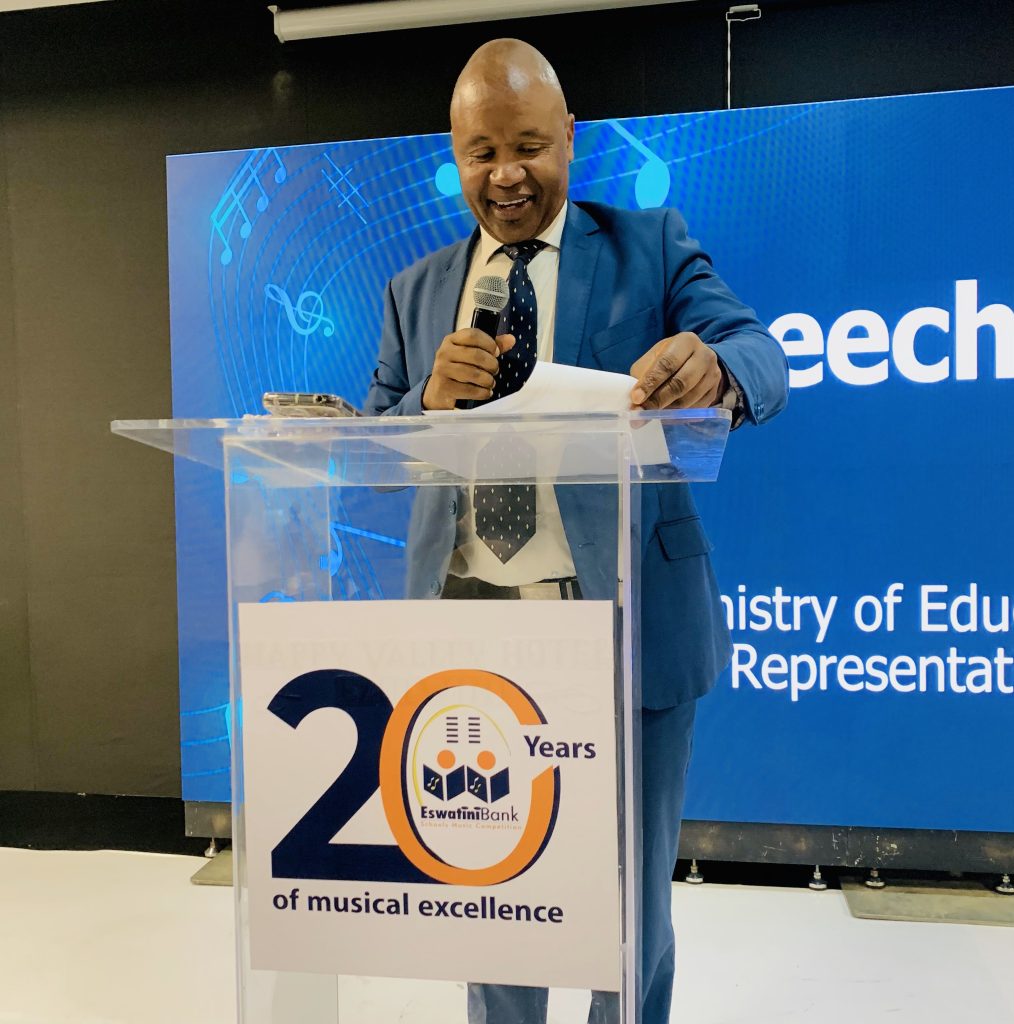
Nhlanhla Dlamini, the Executive Secretary of the Teachers Service Commission, emphasised the profound impact of this event beyond mere musical performance.
“The Choral competition is more than just a musical event,” he stated, highlighting its role as a vital platform for promoting the SiSwati language.
Dlamini noted that all African songs performed in the competition are sung in SiSwati, a practice that not only nurtures cultural identity but also instils a deep sense of pride among learners.
RELATED: Nkwe mandate: Eswatini Bank, EADF disburse E11 mln to advance agri-development in Eswatini
Looking to the future, Dlamini expressed a vision for the competition’s expansion. “We envision incorporating other indigenous languages, such as Zulu, in future competitions,” he shared.
This inclusion, he believes, will encourage regional cultural exchange and broaden learners’ appreciation of Southern African heritage.
Dlamini pointed out that the competition has consistently served as a platform to sensitize the nation on critical issues. He remarked, “We have heard powerful compositions that address gender-based violence (GBV) and promote the rights of women, showing how music can inspire, challenge, and heal.”
This ability of music to convey important social messages underscores the competition’s significance in fostering dialogue and awareness within the community.
The inclusion of the national anthem in the competition further enhances its role in nation-building. Dlamini explained, “This simple inclusion plays a profound role in nation-building, teaching learners to sing their anthem with dignity and understanding.”
Through this practice, students not only learn about their national identity but also develop a sense of belonging and pride in their country.
In a significant development for the educational landscape, Dlamini noted that music has now been incorporated into the primary school Expressive Arts curriculum. He stated, “The competition acts as a practical extension of what learners study in class.
” This integration ensures that students can apply their classroom learning in real-world contexts, reinforcing their skills and fostering a deeper appreciation for the arts.
Moreover, Dlamini highlighted a powerful transformation occurring within the community. “We are witnessing a powerful transformation: young people who have passed through this competition are now using music as their livelihood,” he shared.
RELATED: Eswatini Bank empowers Schools Choral Music Competition with E700,000
This evolution is a testament to the sustainability and real-world impact of the program, showcasing how it empowers students to pursue careers in the arts.
Dlamini encouraged everyone to reflect on the significance of this milestone. “Let us celebrate this journey of 20 years of song, of learning, of culture, and unity,” he concluded.


