


 By
By 
By Delisa Magagula
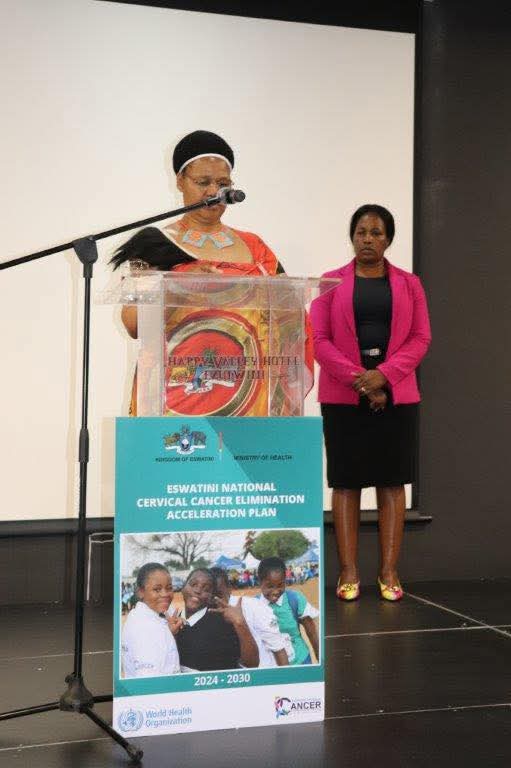
The Government of Eswatini has revealed that it needs E700 million to fully implement the National Cervical Cancer Elimination Acceleration Plan (2024–2030).
This was announced during the official launch of the plan by Her Royal Highness Inkhosikati La Matsebula at Happy Valley Hotel on Monday.
The event was attended by the Minister of Health Mduduzi Matsebula, Senate President Lindiwe Dlamini, Hhohho Regional Administrator Princess Tsandzile, and other key stakeholders from the health and education sectors.
According to the Ministry of Health’s National Cancer Control Unit, the E700 million will cover activities planned for the six-year period under the acceleration plan.
These include HPV vaccination, cervical cancer screening, treatment expansion, infrastructure development, human resource training, and public awareness campaigns.
RELATED: USA waives funding cuts for Anti-Retroviral Treatment in Eswatini
The Programme Manager for the National Cancer Control Unit, Xolisile Dlamini, confirmed that the estimated cost was based on the scale required to meet the World Health Organization’s cervical cancer elimination targets.
The plan aligns with the WHO’s 90-70-90 framework, which aims for 90% of girls to be vaccinated against HPV by age 15, 70% of women to be screened by age 35 and again by 45, and 90% of those diagnosed with cervical cancer to receive treatment.
Dlamini said the funding will be sourced from the national budget, supplemented by contributions from development partners and donor organisations. She said consultations were ongoing to secure financial support and ensure all pillars of the plan are implemented nationwide.
The Minister of Health, Mduduzi Matsebula, said the plan provides a roadmap for the country to eliminate cervical cancer as a public health problem. He said the ministry had already begun laying the groundwork, with key activities being implemented in phases since 2023.
“Screening and treatment services are now available in over 90% of health facilities. HPV vaccination for girls aged 9 to 14 has been rolled out and has reached over 70% coverage nationally. We are now focusing on increasing outreach and awareness to sustain these gains,” said the minister.
The plan also includes the construction of the country’s first public radiotherapy centre, which will be located in Manzini. According to the ministry, the radiotherapy centre is expected to reduce the burden of cancer patients travelling outside the country for treatment.
A funding framework for the facility has already been finalised, and the site has been assessed. During the launch, Her Royal Highness Inkhosikati La Matsebula called for greater accountability in the health sector.
She condemned the theft of government-supplied medicines, saying such acts undermine public health initiatives and stall national progress.
“Those stealing drugs must be removed from the system. These are not small matters. They are affecting the lives of our people, especially women and girls who depend on public health services,” she said.
She commended parents who had allowed their daughters to receive the HPV vaccine, saying this showed trust in the country’s healthcare system and commitment to ending cervical cancer.
The National Cervical Cancer Elimination Acceleration Plan was developed in collaboration with the World Health Organization, the International Atomic Energy Agency (IAEA), the Clinton Health Access Initiative (CHAI), UNICEF, and other partners.
It follows the imPACT review conducted in 2024, which assessed Eswatini’s cancer control capacity and identified key areas for investment.
During the same event it was revealed that Cervical cancer is currently the leading cause of cancer-related deaths among women in Eswatini.
It accounts for more than half of all cancers diagnosed in women. According to health officials, around 360 new cases are diagnosed annually, with high mortality rates, especially among women living with HIV.
The government has reported progress in increasing HPV vaccination coverage and screening rates. In 2014, only 21% of eligible women had ever been screened for cervical cancer. That figure has risen to 65.9% as of 2024.
The Ministry of Health says the new plan will build on this progress and ensure that services are available, accessible, and acceptable to all women and girls across the country.
RELATED: Threat of PEPFAR funding halt could reverse gains in HIV and TB response in Eswatini
Health experts say early detection and treatment of cervical cancer are critical in reducing deaths. They encourage all eligible women to undergo screening and seek medical help if any symptoms appear.
The government is expected to issue a detailed implementation schedule and budget breakdown for the E700 million in the coming months. The Ministry of Health has also committed to releasing regular progress reports throughout the plan period.
The launch event concluded with a call for collaboration between government, civil society, traditional leaders, and the private sector to ensure the success of the plan.
For more information on screening locations, HPV vaccination services, or to view the full National Cervical Cancer Elimination Acceleration Plan, members of the public are advised to contact the Ministry of Health or visit their nearest health facility.


