


 By
By 
By Siphesihle Dlamini
A proud moment for Eswatini and a model for Africa!
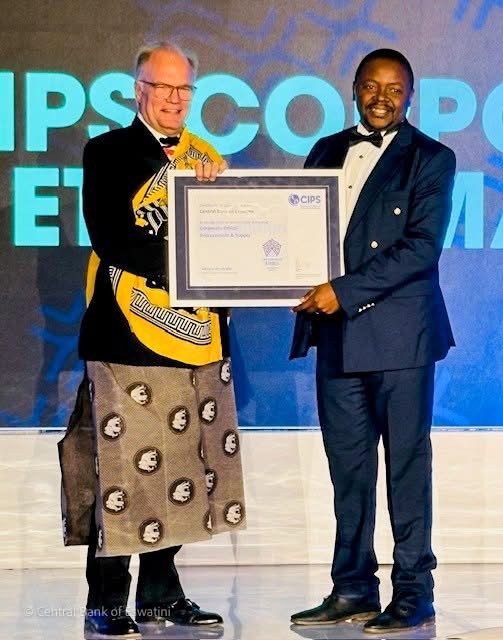
The Central Bank of Eswatini (CBE) has reached a remarkable milestone by receiving a prestigious certificate from the Chartered Institute of Procurement and Supply (CIPS), becoming the first central bank in Africa to achieve this honour alongside the Central Bank of Lesotho.
This recognition underscores the CBE’s commitment to aligning its procurement processes with globally recognised standards, enhancing its operational efficiency, governance, and supplier confidence through ethical and accountable practices.
The award was presented to Warren Dlamini, the Deputy Director of Finance: Supply Chain, during the CIPS Africa Conference held on August 6-7 in South Africa. This event gathered procurement professionals from across the continent, highlighting the importance of ethical procurement practices in fostering sustainable economic growth.
CIPS, the world’s largest professional body for procurement and supply, boasts a global network of over 200,000 professionals. It sets the international benchmark for procurement excellence, offering certifications that validate ethical, efficient, and strategic procurement practices across various industries.
The CBE’s certification is a testament to its dedication to these principles, positioning the bank as a regional leader in ethical procurement and sustainable practices.
A critical aspect of this recognition is the CIPS Corporate Ethics Mark, which signifies that the organisation has committed to upholding the highest standards of ethical conduct in its procurement activities.
To earn this mark, organisations must demonstrate that they have trained their staff in ethical procurement practices and have integrated these principles into their operations. For the CBE, this achievement not only reinforces its dedication to integrity and transparency but also builds trust with stakeholders and suppliers, ensuring long-term value and resilience in its supply chain.
The CBE’s accomplishment is a proud moment for the institution and sets a benchmark for other regional organisations to aspire to. It reflects a growing trend among financial institutions to prioritise ethical practices and sustainability in their operations.
As procurement becomes increasingly critical in driving organisational success, the CBE’s recognition by CIPS serves as an example of how adherence to ethical standards can enhance operational effectiveness and foster positive relationships with suppliers and stakeholders.
In the wake of this achievement, the CBE is expected to leverage its newfound status to further enhance its procurement processes and share best practices with other institutions. By doing so, it can contribute to the broader goal of promoting ethical procurement across Africa, ultimately leading to improved economic stability and growth.


