


 By
By 
By Delisa Magagula
The Eswatini Agriculture Development Fund (EADF) has disbursed more than E32 million since its launch in November 2024, providing targeted financial support to agribusinesses and strengthening the country’s agricultural sector.
The Fund, established with an initial government capital injection of E53 million, was created to address long-standing financing gaps for smallholder and emerging agripreneurs. It offers loans, technical assistance, and risk-mitigation tools to help farmers and agri-enterprises grow and sustain their operations.
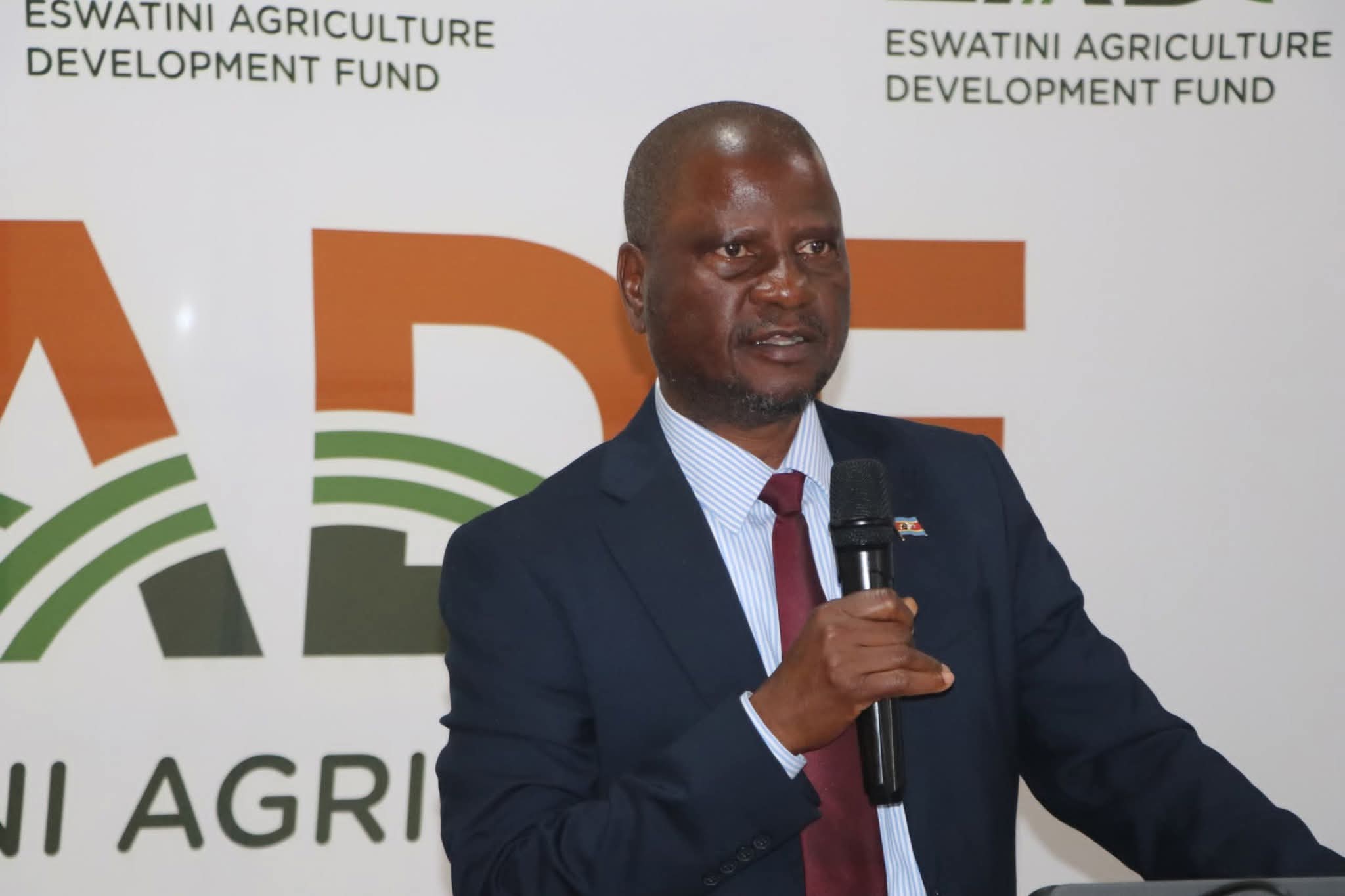
Speaking at the Inception Workshop for the third cohort of beneficiaries in Ezulwini, Minister of Agriculture Mandla Tshawuka commended the rising demand for EADF financing.
“We are pleased with the overwhelming interest that Emaswati have shown in requesting support from the Fund. It shows that Emaswati are determined to work. It also shows the significance of targeted funding in the development of the agricultural sector,” he said.
The third cohort comprises 16 new beneficiaries who have been approved for a combined E21 million in loans. These loans are intended to strengthen production, expand agribusiness operations, and improve value chain linkages.
According to EADF records, total loan approvals since inception stand at approximately E31.15 million, with guaranteed exposure now at E33.96 million.
The Fund provides several financing options tailored to the needs of agricultural entrepreneurs at different stages of growth. Seasonal loans range from E5,000 to E500,000 for new applicants, with existing agripreneurs able to access up to E1 million. Medium-term loans are available from E10,000 to between E3 million and E5 million, depending on the scale of the enterprise.
EADF also plans to introduce matching grants, subsidised inputs, and risk-sharing instruments when additional resources are secured.
These measures aim to lower production costs, improve access to markets, and protect agripreneurs against risks such as droughts, pests, and other climate-related challenges.
The Fund’s mandate is aligned with the Eswatini National Agricultural Investment Plan (ENAIP), which prioritises food security, economic diversification, and sustainable agricultural growth.
Minister Tshawuka stressed that EADF’s objective extends beyond loan recovery, placing emphasis on the long-term viability of funded projects.
“Our focus is not only on seeing the loans being repaid but also on ensuring the sustainability of your projects,” he told beneficiaries.
The Minister urged past, current, and future recipients to remain committed to building productive and resilient agribusinesses that contribute to national food sovereignty and economic development.
Since its launch, the Fund has incorporated training and capacity-building initiatives into its disbursement process. Beneficiaries receive guidance on financial management, agricultural best practices, and market access strategies before and after receiving funding.
For years, many smallholder and emerging farmers in Eswatini struggled to access formal credit. Traditional lenders considered the sector high-risk due to factors such as weather dependency, fluctuating commodity prices, and limited collateral among farmers.
The creation of EADF was intended to close this gap by offering more flexible, agriculture-specific financial products. The Fund also provides technical advisory services and links beneficiaries to input suppliers, extension services, and potential buyers.

By combining finance with technical support, EADF aims to improve repayment rates while ensuring that funded projects generate tangible results.
Although the Fund is less than a year old, officials report that disbursements have already supported diverse agricultural activities across the country. These range from crop production and livestock enterprises to agro-processing ventures.
The third cohort’s E21 million in loans represents the largest single disbursement since EADF’s inception, signalling both increased uptake and confidence in the programme.
Government has positioned the Fund as a strategic instrument for reducing food imports, promoting rural development, and creating employment in the agricultural sector.
As more beneficiaries are added, the expectation is that EADF-supported enterprises will contribute significantly to domestic food supply chains and export potential.
Minister Tshawuka highlighted the national importance of such initiatives, stating that empowering Emaswati through agriculture is central to building a resilient economy.
“The Fund is about empowering Emaswati to grow, thrive, and contribute to national food sovereignty and economic development,” he said.
With further disbursements planned and the introduction of additional support instruments, the Fund’s impact is expected to grow in the coming years.
For many beneficiaries, EADF represents not only a source of capital but also a pathway to long-term agricultural success.
Meanwhile, the EADF’s model of combining finance with capacity building is being viewed as a possible blueprint for addressing other sector-specific funding gaps in Eswatini.
The agriculture sector employs a large share of the population, particularly in rural areas, yet has long suffered from underinvestment and limited access to modern technologies.
By providing both capital and training, the Fund is enabling farmers to adopt more efficient methods, increase yields, and diversify production.
Beneficiaries from earlier cohorts have reported improvements in productivity and market access, citing the Fund’s flexibility and understanding of agricultural realities as critical factors in their success.
Some have expanded into value-added processing, while others have been able to invest in irrigation systems, livestock, or mechanisation.
Government officials have noted that the EADF’s activities contribute directly to the country’s food import substitution strategy, reducing reliance on imported produce and creating opportunities for export-oriented agribusinesses.
As global food markets remain volatile, the Fund’s role in bolstering domestic production is expected to become increasingly vital.
The Fund’s risk-sharing instruments and planned contingency support for climate-related shocks are also seen as essential in protecting investments and ensuring long-term sustainability.
With agriculture facing rising threats from extreme weather, these measures could safeguard livelihoods and stabilise supply chains.
In the coming months, the Fund is expected to finalise additional partnerships with financial institutions, input suppliers, and buyers, further strengthening its support network for agripreneurs.
Stakeholders in the sector say the combination of targeted funding, practical support, and strategic alignment with national goals makes the EADF a key driver of Eswatini’s agricultural transformation.


